On Monday, the federal setting minister launched particulars on its ongoing plans to halt subsidies to the sector
Article content material
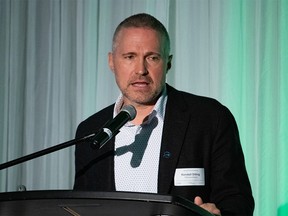
Cenovus Power CEO Jon McKenzie is puzzled by Ottawa’s discuss of phasing out inefficient subsidies to Canada’s oil and fuel sector, however doesn’t see it having a lot impact on decarbonization plans for the oilsands.
Commercial 2

Article content material
Earlier this week, Atmosphere Minister Steven Guilbeault unveiled particulars of what the federal authorities calls the Inefficient Fossil Gas Subsidies Authorities of Canada Self‑Evaluation Evaluation Framework.
Article content material
It additionally launched the equally catchy Inefficient Fossil Gas Subsidies Authorities of Canada Tips, which builds upon Ottawa’s earlier commitments to finish direct public help to the fossil gas trade.
“I don’t understand how they title these items of laws or how they find yourself positioning them, however whether it is what it purports to be, it in all probability must be a reasonably quick piece of laws,” McKenzie advised analysts on Thursday.
“I’ve been on this trade for lots of years and plenty of of these years have been spent in finance. And I definitely keep in mind writing quite a lot of cheques to the provincial and federal governments. I don’t keep in mind receiving quite a lot of cheques in return.”
On Monday, the federal setting minister launched particulars on its ongoing plans to halt subsidies to the sector, publishing a yardstick of types to evaluate which tax and non-tax measures are deemed to be an inefficient fossil gas incentive.

Article content material
Commercial 3
Article content material
The federal government says all subsidies might be thought of inefficient, except they permit vital emissions reductions, help clear vitality and know-how, or help Indigenous financial participation.
Different exemptions embody offering important companies to distant communities, supporting abated oil and fuel manufacturing — akin to utilizing carbon seize and storage (CCS) to sequester emissions — or for tasks with a reputable plan to attain net-zero by the top of this decade.
“It ensures that the one federal help for oil and fuel given to the petroleum sector goes to tasks that decarbonize the sector,” Guilbeault advised reporters in Montreal.

Through the Cenovus’ second-quarter earnings name, McKenzie famous the Calgary-based firm paid almost $4.5 billion in royalties and taxes final yr, exceeding the quantity earmarked to its capital program.
Though Cenovus reported its internet earnings dropped within the second quarter to $866 million, down from $2.4 billion a yr earlier — a interval of upper commodity costs — he expects the corporate’s taxes and royalties paid out could possibly be even larger this yr.
Commercial 4
Article content material
And what sensible impact will the brand new federal framework have?
“We definitely hear political rhetoric with regard to grease and fuel subsidies. We’re simply actually unsure what it means as a result of, once more, we’re probably not conscious of any oil and fuel subsidies for the trade,” McKenzie added.
“I don’t consider it does have any impression on Pathways in any respect.”
Cenovus is a founding member of the Pathways Alliance, a gaggle of six main oilsands operators collaborating to succeed in net-zero emissions by 2050.
The alliance has proposed a $16.5-billion carbon seize and storage community, which features a CO2 transportation pipeline that connects oilsands services to an underground storage hub close to Chilly Lake.
Ottawa has beforehand pledged to supply as much as a 50 per cent funding tax credit score for carbon seize tasks.
-

Canada bans some fossil gas subsidies, assembly decade-old G20 pledge
-

Cenovus lowers upstream manufacturing steering attributable to wildfires, studies second quarter earnings down
-

Varcoe: ‘Gravy to get to 80’ — As oil costs cost larger, outlook brightens for producers and province
-

Varcoe: Oilsands giants warn Canada falling behind U.S. on carbon seize incentives
The Pathways Alliance members have been urgent for added assist from the province and Ottawa to be aggressive with bigger incentives supplied within the U.S. Inflation Discount Act.
Commercial 5
Article content material
In response to Environmental Defence Canada, the federal authorities supplied greater than $20.2 billion in monetary help and subsidies to the fossil gas sector in 2022, together with $12 billion for mortgage ensures and helps tied to increasing the Trans Mountain pipeline.
The group additionally recognized $7.8 billion that Ottawa supplies Export Improvement Canada, a Crown company that has supplied financing for oil and fuel tasks all over the world.
Julia Levin of Environmental Defence identified the sector is now in search of extra subsidies for carbon seize and storage developments.
“We’ve large issues with public cash going to carbon seize,” she mentioned in an interview.
Response from trade teams was comparatively benign to this week’s federal pronouncement.
The Canadian Affiliation of Petroleum Producers mentioned it’s “usually aligned” with Ottawa’s new federal framework, whereas additionally noting international demand for vitality is rising and oil and fuel will play a vital function nicely past 2050.
“We’re happy to see the rules acknowledge the necessity for presidency partnership on tasks important to Canada’s efforts to fulfill its local weather commitments,” Pathways Alliance president Kendall Dilling mentioned in an announcement.
Commercial 6
Article content material
College of Alberta vitality economist Andrew Leach famous the trade has seen varied incentives and authorities investments remodeled the a long time, akin to by way of the Alberta Oil Sands Know-how and Analysis Authority (AOSTRA) and the Trans Mountain enlargement.
“We all know there are many completely different spending packages related to growing the oilsands,” Leach mentioned.
“Is that the correct factor to do? Maybe it’s, however not each sector advantages from multibillion-dollar analysis arms.”
There’s additionally little doubt the federal authorities and province obtain giant quantities of taxes and royalties from the trade. And authorities help might be required for costly carbon seize and storage developments to maneuver forward, mentioned trade analyst Phil Skolnick with Eight Capital in New York.
“These aren’t a excessive return mission, so it’s essential to have a subsidy to make it work,” he mentioned.
Cenovus chief sustainability officer Rhona DelFrari mentioned the Pathways group is shifting “full steam forward” on its foundational carbon seize and storage mission, noting bilateral talks are happening between the province and federal authorities.
“They’re taking this actually critically,” she mentioned.
“The governments perceive how essential the CCS mission is for, not only for our sector, however for your entire nation.”
Chris Varcoe is a Calgary Herald columnist.
Feedback
Postmedia is dedicated to sustaining a vigorous however civil discussion board for dialogue and encourage all readers to share their views on our articles. Feedback might take as much as an hour for moderation earlier than showing on the location. We ask you to maintain your feedback related and respectful. We’ve enabled e-mail notifications—you’ll now obtain an e-mail in the event you obtain a reply to your remark, there’s an replace to a remark thread you comply with or if a person you comply with feedback. Go to our Neighborhood Tips for extra data and particulars on the right way to regulate your e-mail settings.
Be a part of the Dialog